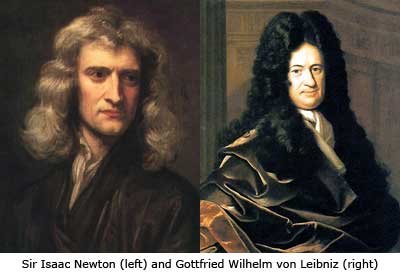
German inventor, Orffyreus longed forperpetual motion
with an infinite desire.He united himself so closely to perpetual motion that
neither angel nor man, nor any creature in heaven or on earth, could separate him from it.The bond between them is indissoluble; their union is eternal.Never,
the perpetual motion without Orffyreus; or, Orffyreus - without the perpetual motion. It was because all his journeying, all
his eagerness, all his pursuits, all his desires were directed towards the perpetual motion and because to die in its embrace
was for him the very height of glory and success.
Throughout
his life, he eagerly sought after the perpetual motion.Like
a thirsting deer, he hastened from village to village, from town to town; with giant strides, he pursued his way towards his
destination.
It
is a very long and messy story that I have told you in the previous pages.Many
books could be written about it and in fact, many have appeared recently.The
point of the story is that perpetual motion is possible.Unfortunately, it is
a heresy in the orthodoxy of science.Nevertheless, the record indicates that
Orffyreus (Bessler) built many over balancing wheels that successfully worked.Careful
to hide its mechanism, he demonstrated it convincingly to critically qualified observers who were suitably impressed, though
still unwilling to take it at face value.His object was simply to sell the secret
rather than reveal it for nothing so that he could run a institute “Fortress of the God”; but he could find no
one interested enough to pay his price, so on 12 November 1712 he eventually destroyed the machine at the Castle of Weissenstein..
Orffyreus
was passionate about his case.Some people called him obsessed.He called it his campaign for justice.When he took support
of Leibniz, others called it campaign against Newton.Orffyreus intensity about
the case soon alienated many of those who would otherwise have been his supporters.He complained to the Gravesande who reported his case to Newton, and consequently every thing ended in a tragic manner.He destroyed his machine.It could be
said that he was his own worst enemy.
Meditating on the majestic art of perpetual
motion, one of the greatest handiworks of God, Orffyreus alone found grace with
God for himself. No patriarch or prophet
or any other holy person of the Old Law
could manage to find this grace. Poor people and little children followed
him everywhere seeing him as one of
their own. The simplicity, the
kindliness, the humble courtesy, and the charity they witnessed in Orffyreus made them press close about
him. One day when he was demonstrating
his wheel at his home in Gera, the children, who were usually about him,
pressed upon him from behind. The
watchmakers who were nearest to Orffyreus pushed them back. On seeing this Orffyreus rebuked watch
makers and said to
them, "Do not keep the children
away from me"
Evaluation of Orffyreus
In his rare
work, we find culmination of a new mechanics that aimed at producing power from nothing.Through it, he attempted to reconcile his Catholic faith and the new worldview based on perpetual motion.
Orffyreus
boldly echoed the confidence of his contemporary Jesuits by proclaiming that his “new world created from nothing”
as revealed by his perpetual motion was "the best of all possible worlds.”We
must remember also that we are living in Orffyreus 's universe.Once universe
begins it is subject to the law of perpetual motion.Orffyreus assumedthat the universe is not a clock that needs rewinding but like a grand perpetual motion machine with hidden
distinct parts, ultimately intelligible to us, it runs forever.Our job is to
observe the external motions of the machine and deduce the hidden details and imitate them for the benefit of mankind. The
world is a synergistic whole, which consists of separate things, and these things consist of parts; our job is to figure out
how the parts all fit and how the forces that bind the parts interact and make them move.
Orffyreus
also condemned the practice; the way we produce power by destruction of things like wood, coal etc is erroneous as it creates
pollution. To create power by perpetual motion is in harmony with nature therefore most natural.
He
believed that perpetual motion is a perfect science that provides fertile ground for incredible scenarios and the floodgates
of the strange are opened.You can create energy from nothing, and from energy,
you can create rest of the things. Perpetual motion puts uscloser
to God and his powers.
Orffyreus
was usually as critical-minded as a modern experimentalist. He did not rely on any authority, and always tested reports of
others by his own experiments.The writings both of the Scholastics and the Renaissance
philosophers on the nature of gravity abounded with occult, superstitious stories and magic.Orffyreus rejected all that with unswerving criticism and based his findings on experience and experiment only. His
spirit of observing and experimenting was taken over not from scholars but from manual workers.This attitude is so exceptional in his period that the question arises where it originates.Since critical minded experimentalists appear more and more frequently among the scholars a few decades
after Orffyreus, a satisfactory answer would at the same time contribute to the solution of the problem of the origin of modern
science in general.
He worked hard to bring the
earth down to scale, to show that perpetual motion is a natural law among others, and to demonstrate the pervasiveness and
simplicity of natural law of perpetual motion (that there is, for instance, a behavior pattern common to planetary motion
and motion of particles in atom) he constructed and exhibited various perpetual motion wheels as we have already studied.
But more important than Orffyreus's conclusions was the method by which he reached them. He was a true scientist as his work
on gravity was one of the first attempts to use experiment, not merely to illustrate conclusions reached by play of mathematics,
but to test hypotheses by experiment and so to extend knowledge. But, he was unscrupulous in describing everything he did
in such a way that it would not be easily possible for others to check his findings .
Orffyreus, a man, whose dominant
motive was to get power from nothing; and the good things of this life that power brings in its train taught us method of harnessing
gravity by simple mechanical arrangments . What distinguished Orffyreus from other scientist was his discovery that science
is a road to power. ."
His worldview was characteristically
modern, pragmatic, and utilitarian.He was a pole apart from the contemporary
scientist, both in his conception of perpetual motion and in his conception of the means to achieve it. By perpetual motion,
he desired to bring a total reconstruction of the sciences, arts and all human knowledge.
It is to be stressed here how
this view, while so familiar to perpetual motion inventors as to be "intuitively obvious," nonetheless sharply contrasts with
the scientific attitudes towards such knowledge as meaningless in its own sake.
Saint
Augustine (354 – 430)
said: “Where there is no faith, there is no knowledge, no
truth.” Orffyreus believed that every
object has a life, as it is part of a vibrant and lively universe, a unified
whole. The inherent faith that
everything is endowed with life kept on catalyzing Orffyreus' thinking to the
point that he finally miraculously discovered perpetual motion and made dead
matter alive into a vibrant perpetual motion machine by incorporating principle
of perpetual motion. Thus he proved that perpetual motion is also possible at
terrestrial level like celestial and atomic domains.
Deva Ramananda remarks here:
“If
Orffyreus had not already had this hypothesis
that he wanted to check, it would never have occurred to him to conceive
perpetual motion and set up his perpetual motion machine. Before the movement
of perpetual motion machine could be significant, Orffyreus had to know what he
was looking for. This suggests that one
of the differences between mere observation and experiment is that in the latter
we observe only after we have constructed a situation with a particular
hypothesis in mind.”
Leibniz and Orffyreus
Orffyreus
wanted to do much for the cause of science by his example as well as by his perpetual motion machine. He decided that by living
a plain but honest life, declining magnificent offers of positions from royal patrons, at the same time refusing to grovel
before nobility, he would set a worthy example to other philosophers whose cringing and pusillanimous attitude towards persons
of wealth or position had hitherto earned them the contempt of the upper classes.
But he could
not stick to his ideals. When he met to Leibniz he could not reject offer of sponsorship from Count Karl.
His Worldview
Leibniz strove to develop a science
of nature based on the Aristotelian notion of a teleological (i.e., goal driven) force inherent in all nature.His system proposed a nature that was autonomous but dynamic, driven by immanent laws towards rational
goals.
Leibniz announced
that we are obviously living in the best of all possible worlds, and the physicist Laplace alleged that God's omniscience
(if such a supreme intelligence existed) could be given a scientific definition. Everything made sense -- almost everything.
Newton’s God created a universe capable
of existing for many ages but not for eternity as it was seen as being a universe that needed reform every now and again.Not by chance, Newton’s God in Leibniz’s opinion was a poor watchmaker.Instead of making a perfect timepiece, God had made one that needed frequent maintenance:
"I hope – Leibniz wrote – that there are not many people in England who hold the same point of view as Mr. Newton
regarding philosophy and that they don’t appreciate this imperfection in the universe that obliges God to re-assemble
it now and again. Their philosophy is in my opinion no way worthy of the wisdom and greatness of the Creator of all things".
David Kubrin* contends that Newton was led to his speculations
regarding the cosmogony of the universe by his refusal of the thesis of the eternal world.In antithesis with that idea, he was in accord with many of his contemporaries regarding the thesis of a progressive
decline of power and of the regularity of the cosmos.In 1675 Newton had delegated
the task of renewing the movement and activity of the cosmos to an "ethereal material". In the Principia of 1686, he entrusted
this same task to the comets. Newton wrote:
“I believe that that spirit which constitutes a minimal, most subtle and good part of
our air originates principally in the comets”.
In his Queries (in 1706) in the Latin edition of Optica, Newton described the decay of the universe and of the
necessities of the active principles that preserve it in life emerges in close up.
Newton wrote:
“As
we see that the variety of movement that we find in the world is always decreasing, it is necessary to preserve and renew
it by means of active principles”.
Orffyreus
believed that God is not a duty bound mechanic who periodically rewinds his clocks to run it forever but he knows greater
arts.He is a perfect perpetual motionist who sets his world perpetual motion
machine to run forever to do all useful work without any necessity to expend any effort on his part once it is started.
Deva Ramananda
remarks:
“St.
Thomas Aquinas likened God to an artisan, an artist who had expertly designed his handiwork and then continued to work along
with his appointed agents on earth to perfect his handiwork. Orffyreus was disappointed to see that the clock metaphor captured
the imagination of the best minds in Europe. Philosophers and poets, scientists, and theologians projected the language of
the clock onto the universe, as they knew nothing about the truth of perpetual motion that could better describe the world
freeing God from his duty of rewinding.
In developing a correct worldview that Orffyreus based on his perpetual
motion machine, he was far ahead to all of those leading philosophers and scientist of his time who were debating a clockwork
universe and struggling hard to reconcile it with basic tenets of Christianity.Orffyreus looked to the heavens and saw the same principles at work as could be found in the workings of his perpetual
motion machine. Just as a beautifully designed perpetual motion machine runs forever by a prearranged, prefixed set of principles
and rules without demand of energy, so, too, does the perpetual motion based world and everything in it.According to him, God was a master perpetual motionist who designed the world perpetual motion machine
and started it to run forever without further demand of any rewinding. On the other hand, even the best talents in the world
before and after him failed to conceive perpetual motion and instead they relied on clock to describe the working of the world.".”
In this cosmology God is not separate from His creation,
or transcendent, to use philosophical terminology.God is "in the very design
of perpetual motion " in this universe in a very intimate way. The intelligence of Gods that designs perpetual motion is in
the universe in a sense.It runs the universe and by it universe is in perpetual
motion.The purpose for the design he has for every object is the continual,
sustaining cause of all motion.God does not mechanically push things around.Each object upon its creation by God is given a purpose and it moves the way it does
because it is striving in an alive, somewhat conscious way to always fulfill that purpose.Everything in this universe is alive to some extent.Even a rock has a
goal. If you pick it up and drop it, it will fall down because it "wants" to return to its natural state of rest “nothing”
the Grand Void. Thus, there
was no need to explain rewinding of clock further in this cosmology.Perpetual
motion, which is also circular motion around a geometric center of a force, was considered a natural motion; it was an explanation
in itself.Perpetual motion, as the most perfect motion from the geometric point
of view of God, nothing further needed to be said.
Thus, we find
a direct conceptual connection between the rejection of a teleological explanation for planetary motion, the idea of a greater
God and an infinite universe, and the ultimate solution of Orffyreus: a quantitative representation of the force of gravity.
The German
inventor Orffyreus (1680-1745) was the first inventor-philosopher to take these strains of thought and organize them into
a comprehensive, influential worldview.For Orffyreus, the originator of Gravity
perpetual motion machine and what is referred to today as an over-balancing wheel, the universe was a huge mechanical perpetual
motion machine full of material atoms or "corpuscles," and all change could be explained by the free self-movement of these
particles of matter and collisions between them.
Orffyreus
argued that biblical scripture should be interpreted in the light of perpetual motion machine, rather than the traditional,
authoritative ideas, traces of ancient explanations and scientific discoveries, and he also stressed the importance of observation,
quantitative measurement, and experiment in perpetual motion inthe pursuit of
the understanding God's creation.
Orffyreus believed that planets move the way they do, because they are part of a perpetual motion, which demands
a specific design to meet a specific purpose in the plan of the universe.For
this reason “Close Path” provided by rotational motion is very important.For this reason, having circular paths for the planets is very important, and it was so even for Copernicus.He attempted to preserve the notion of a circular motion as a natural motion, but as we have seen, his
system required circular motion around invisible points that in turn revolved around other central points, and very few of
his contemporaries failed to see major problems with such a scheme.With Kepler's
conception of an ellipse it was no longer possible to maintain that the motion of the planets was a natural motion requiring
no explanation. Now a physical mechanism that moved the planets and kept them in their orbits was needed, and the lack of
such a mechanism could no longer be swept under an old cosmological rug.
Orffyreus
supplied the answer with his invention of gravity perpetual motion machine and unified celestial and terrestrial events into
one comprehensive explanation. There would no longer be two realms, a celestial and terrestrial reality with different substances
and laws.With Orffyreus, there would be only one and gravity would apply universally
throughout, responsible for the motions of the planets as well as motion of gravity perpetual motion machine.
Orffyreus
was indeed a great inventor, but he was also a human being and one with a rather large ego. Orffyreus was poor and almost
always in need of a job.
Leibniz once
said “Orffyreus is my friend”, historians on perpetual motion often gloss over this event as a great collaboration
between two objective scientists in the pursuit of truth. Their personalities and their philosophy, however, clashed massively.
Leibniz loved to party, he fought with Newton; Orffyreus was an introverted hermit.Leibniz had assumed that he would be shown all of Orffyreus' superior data on the perpetual motion machine., but Orffyreus
was afraid that Leibnizwould be too successful. So he only gave him parts here
and there. Leibniz tried to manipulate Orffyreus to reveal some great understanding. Leibniz had intended to use Orffyreus
for political purposes; he now realized that Orffyreus had used him for his own interest. Leibniz then spent long time
trying to view Orffyreus’ data if Newton’s theory can be toppled, but it never happened, as Newton’s jealous
heirs also did not want Leibniz to gain fame at the expense of Newton’s reputation.
In world of
science, Orffyreus work was lost in this fight forever.
Let me quote
Deva Ramanada here:
“Through his martyrdom, the perpetual motion of ignominy has become so glorious, its poverty and starkness
so enriching, its sorrows so agreeable, its austerity so attractive, and now an object to be adored by angels and bymen.”
Deva Ramananda’s Devotion
To Orffyreus
During his
whole life, our master Ramananda has remained occupied in meditating on the perpetual motion.We already know, how when he learnt about Orffyreus, hisheart was
filled with wonder and he meditated on marvels of perpetual motion.
Deva Ramananda
wrote:"Whenever I used to contemplate perpetual motion, the beauty, modesty,
and wisdom of nature, my heart was filled with joy and then more often I remembered Orffyreus.”
Denying bluntly all historical
evidence, scientist still maintain that perpetual motion is impossible but our common sense indicates that it is silly to
consider perpetual motion as something impossible when we have so much evidence from history.
For the distinct
character of Orffyreus’ contribution, together with his overwhelming influence on perpetual motion enthusiast to date,
Ramananda has dubbed the entire episode as"the Orffyrean revolution."
My master
Deva Ramananda remarks:
“ If they (scientist)
could understand what the Orffyreus added to the knowledge of mechanics, they shall be obliged to own that they have not the
least right to despise him. Pity those who know nothing of him, nor have ever read him; and who give the strongest proofs
of their own ignorance and pride, in the manner wherein they presume to treat perpetual motion as something will o wisp or
a fraud in spite of wonderful evidence furnished by Orffyreus wheel.
Orffyreus
stands like a solid rock between renaissance and dawn of science". Ramananda calls
him a man of admirable sagacity, who laid the foundation of perpetual motion, which hisbook on perpetual motion glories in having brought to perfection.In reality,
what a glorious light he diffused over the nature of gravity from a utilitarian aspect, in his attempt to construct an overbalancing
wheel, and in discovering the properties of gravity as an inexhaustible source of energy.On this web site, I have produced proofs of the fecundity of genius belonging to this celebrated man.
This is common
practice thatwe admire martyrs andhow they triumphed over the cruelest sufferings.Ramananda will spend
the rest of his life visiting the places that had been hallowed by Orffyreus presence and by his sufferings.There, he will meditate on his boundless love and on his terrible passion with perpetual motion.Ramananda tells us that this will also be the devotion of thescholars in the coming times.From all over the world perpetual motion
lovers will go to the Germany to offer homage, to engrave more deeply on their hearts a great love and remembrance of Orffyreus
by seeing the places and things he had made, his work, his sufferings, and his death.
I shall end this article
with following remarks from Deva Ramananda.*
“Invention
of Orffyreus will remain a monumental achievement in the history of human civilization.My admiration at the surprising invention of this great man carries me to conceive of him as a person, who not only
must raise the glory of the country, which gave him birth but also bring glory to mankind.By having transcended the greatest and noblest of our faculties to solve the hoariest headed problem, he has done great
honor to the human nature.Until, he attempted to solve, perpetual motion appeared
to be a great riddle to all, wholly beyond the reach of limited capacities of great men of science and man who steadfastly
struggled to find the solution to it, who lived before and after him.Perpetual
motion is one of the most magnificent pieces of mechanism of the Nature as it is revealed in her eternal dance of all objects
in macrocosmic as well as microcosmic world. Incessant motion of the planets around the sun in our solar system, motion of
galaxies and motion of elementary particles in the atom- all display perpetual motion as basic principle Nature.Duplication of this mechanism at the level of human existence, which lies between the microcosm and macrocosm,
is certainly the proof of our human capacities that can do miracles!!!
Today Orffyreus is forgotten, but sooner or later, truth has to prevail.In times to come, a student of the history of science and technology will assign Orffyreus a further place and importance,
which the average man today can hardly appreciate.He will see in the German
genius a leading figure in engineering of perpetual motion that belonged to a period when even basic mechanical science was
in its infancy.He gave birth to perpetual motion, added a new meaning to it,
guided it to solve practical problems of the life, and made it fundamental categories of the men's thinking.Perpetual motion not only gives a solution to our energy problems but also makes us better acquainted with
the Nature, its unity and harmony and raises our hopes for further penetrating the new secrets. It puts us closer to God.”
References
*
(See Philip R. Sloan, "Natural History, 1670-1802," in Olby and others, 302 ff.)
* Ramananda’s book – “The
Secret Doctrine of Perpetual Motion Revealed”
Conclusion
Perpetual motion is
possible. With so much abundant energy from perpetual motion machines, the world will be no longer a discomforting place.
Do not believe what science says about perpetual motion. Go on trying to invent perpetual motion machine.
Perpetual Motion:From Repression to Revolution
As far as science of energy,
thermodynamics and power engineering is concerned; it is instructive for the
physicist to think of the last hundred years as a mad and crazy development in
science from which they need to wake up from.The so called progress has caused
tremendous losses to humankind. Absolutely nothing about the official history
of the science and perpetual motion is true. Every single article and textbook
that has been written on the impossibility of perpetual motion is propaganda.
Alternative histories need to be written. The portrayal of the perpetual
motionist in the EEC series of books is real as well as symbolic. A
“perpetual motionist” is in every one of us always fighting against
the tradition, prejudice and falsehood for the sake of truth. Perpetual motion
has been suppressed through an organized campaign of ridicule from mainstream
physicists for centuries. It is most unfortunate that the talents,
potentialities, and aspirations of perpetual motionists have been suppressed by
science that was created to be the beacon of openmindedness, honest and
impartial enquiry, truth and enlightenment.
Jonathan Eisen says: “We all want
acceptance, and to limit that cognitive dissonance between us and the people
that matter and the system that really matters. But somewhere is that place
where we know that all this is wrong, that it doesn't really have to be like
this, doesn't really have to continue like this until we are all dead on a dead
planet. Somewhere we know that within the human spirit is a place of creativity
so powerful and so encompassing, that given half a chance we can change this
course, change this moment and change history.”[i]
On account of ridicule associated
with perpetual motion, it is difficult to evaluate importance of works of
Orffyreus in the scale of world history. It is certainly difficult forany historians who is ignorant of truth
of perpetual motion to assign any important place to him. However, the passing
of the years and the many stupendous and unexpected developmentsin free energy which have occurred in
past recent decadesthen suggest
that in centuries to come he will be remembered as one of the main moulders of
the modern world. Orffyreus’ remembrance thus becomes much more relevant
in this modern era of Science and Technology. Everyone, who becomes a part of
an effort to understand the truth of perpetual motion and free energy, is bound
to get enriched, empowered and enlightened. There is a Himalayan mountain of proof
that can be seen far off in the distance from the dry and prejudiced fields of
mainstream historian’s understanding which clearly shows how Issac
Newtonin collaboration with a
select group of professors and allies suppressed scientific and technological
discoveries of Orffyreus and Hatzfeld in the field of perpetual motion. Deva
Ramananda has explained the significance of Orffyreus’ contributions to
science and technology and why his work was suppressed by the abominable Newton and historians. The
creative genius of Orffyreus produced amazing fruits. His gravity wheel
achievements were revolutionary in the greatest sense of the word as it had
power to transform science and technology. In his works on Orffyreus and the
implications of his gravity wheel, Deva Ramananda expressed a worldview that is
revolutionary, enlightened, and transformative. Suffice to say, Orffyreus
opened the door to an incredible future for humanity, and the Newton, his allies and financial criminals
who worked at Royal Society to buy his wheel closed it shut. I used to think
Orffyreus’ death was too mysterious to penetrate and understand. But it
makes sense that his enemies killed him because he was serious threat to
established works of scientists, the way Orffyreus himself was determined to
bring the truth of perpetual motion.In order to establish the single law of perpetual motion,Orffyreuschallenged the putative
established laws of science,especially,the Newton’sthree laws of motion in a very real way,
not just through theoryand words,
but with action. . As a bright, young, and charismatic inventor, Orffyreus
might have occupied a great place in the history of technology.With timely support to Orffyreus, if his
most revolutionary gravity wheel were actualized on a grand and worldwide scale
then the course of human development and human history would’ve undergone
a dramatic change for the better.
Why Orffyreus is still missing in
history or text books? He has been written out of our history books. He is a
historical pariah, he told the truth, and blew the whistle on the scientists.
If you look into his works that he created, and what he left, you’ll see
the reason why he was such a potential threat to the Newton and mainstream scientific
establishment. He still lives in the heart of truthful man, his gravity wheel
is still a threat to science and energy capitalists.Repression is an
attempt to stifle dissent. The general public hardly knows about the repressive
policies of science, corporate and government which forms a nexus to safeguard
their interests. The reality of what Orffyreus actually discovered seems to be
becoming more widespread by research findings of J. Collins, Dr. R.K. Menaria
and Master Deva Ramananda and now it is sparking protests among free energy
enthusiasts. Here’s something this author almost guarantee: If there is
something to Orffyreus’ invention, it will eventually be realized.
Orffyreus is and continues to be a hero for our community. On the basis of the
solid evidence and his works on perpetual motion, there is a greatcause to initiate a campaign against the
physicists who rejects perpetual motion and glorify law of conservation of
energy, we need to stop thempropagate false doctrinesto
spoil the minds of students of younger generations.
Later or sooner scientists
have to come to realize that there is no fundamental law of energy except that
consciousness can create energy and matter, out of nothing. Being self existent
and super intelligent, the Universal Energy can fashion universe out of
nothing. Our individual consciousness is part of it. Mind or brain, its thought
process is, in fact, an energy creating process. Human gadgets are energy
multipliers. This “fundamental law”, discovered and expressed in a
limited context by Herr Dühring, reads as follows:
Law No. 1. “The
productivity of the economic instruments, natural resources and human energy is
increased by inventions and discoveries”[ii]
Energy is in constant state of
creation. We need to lay deeper foundations of science.
Bhagwat Gita says : Though
Universal Energyis involved, it is
not used.
Herr Eugen Dühring
states:
“Whereas only ten years
ago the great basic law of motion, then recently discovered, was as yet
conceived merely as a law of the conservation of energy, as the mere expression
of the indestructibility and uncreatability of motion, that is, merely in its
quantitative aspect, this narrow negative conception is being more and more
supplanted by the positive idea of the transformation of energy, in which for the
first time the qualitative content of the process comes into its own, and the
last vestige of an extramundane creator is obliterated. That the quantity of
motion (so-called energy) remains unaltered when it is transformed from kinetic
energy (so-called mechanical force) into electricity, heat, potential energy,
etc., and vice versa, no longer needs to be preached as something new; it
serves as the already secured basis for the now much more pregnant
investigation into the very process of transformation, the great basic process,
knowledge of which comprises all knowledge of nature.”[iii]
Repression is an attempt to
stifle dissent. The general public hardly knows about the repressive policies
of science corporate and government which forms a nexus to safeguard their
interests.
The physics which rejects
perpetual motion is the bundle of the lies. There are many things about
mainstream physics that irritates me,
not the least of which is the physicist’s ignorance of perpetual motion.
In this volume, I will argue that the physicists’ understanding of motion
and perpetual motion is fundamentally flawed, on a par with the flat earth
hypothesis. I believe that having a correct foundational model of perpetual
motionwill not only unleash
an age of free energy but also revolutionize entire science and
technology.One thing most of
us know, is that you can tell more about the character of a physicists, not by
what others say of them, but by what they say about the perpetual
motionist.Perpetual motionist has
been called “pseudo-scientist,” “muddy headed,”
“know-nothing,” “flat-earther,”
“charlatan,” “cranky,” “crackpot”
“nut”, “screwball” and yet with so many degrading
terms. Physicists have failed to understand the psychology of perpetual motion.More often than not, when physicists
reject noble art of perpetual motion and digress to the level of insults, it is
because they are not capable of supporting any real argument or point. The fear
of perpetual motionist in their mind is actually worse than the perpetual motion
itself. Perpetual motionist has a simple and intuitive explanation for the
working of the universe; on the other hand, physicists are failed perpetual
motionists.Since they failed to
build a real perpetual motion, they have made basically every advance through
the use of models and mathematics. Indeed, assumptions, opinions and models are
fairly useless things if they don't lead to a model of reality that in fact
corresponds to reality. However, every physicist believes that each model is
quite holy to get allegiance of respective adherents.They have great skills to teach us
something, both from their sacrosanct models that work and equally as much from
the models that don't work. And the point of these models is that by turning a
simple phenomenon into a complex one, they claim to understand a phenomenon in
a simplified manner to understand more complex interactions in the actual
physical world. At the same time, the show, the fad and fashion must go on; so
they leave lot of scope for the next generation to create new models.They believe in creating a new
paradigm because all of them believe that previous models were approximations
only, hence, in this manner, they develop science, and keep busy the Nobel
foundation,to receive Nobel
Prize for their lies.
Physicists must cease to believe that they have inscribed laws of science
on granite. The point here is that the current laws of physics are not the last
word on the description of the universe. Without a doubt, science rests on the
hollow foundations of law of conservation of energy; certainly, one must never
underestimate the capacity of physicists to save the sacrosanct law by
manipulating the results as they want using mathematics. A number of
inconsistencies at extremely large and extremely small scales exist, all of
which need to be actively investigated. Like a spider, physicist is always
under danger of being caught in its complex structure of web of science built
of weird theories, ephemeral laws and sacrosanct equations.Entire physics needs to be revised in
the light of truth of perpetual motion.The only way to figure out which is the correct theoryis to revise the experiments which
physicists have never done seriously or correctly and see which one is most
reflective of the reality.
The reasons why physicist could
not invent a perpetual motion are many. Physicists think they understood
motion but they actually fought with each other for centuries and understood
nothing or understood everything very poorly. Aristotle thought perpetual
motion belonged to God. Aristotle’s thinking was poor as he believed in
two worlds, first, heavens where perpetual motion go forever but second, the
world where a thing once started comes to a halt. Another error he made, he
believed you cannot create something out of nothing. Galileo failed to conceive
that a pendulum bob can rise higher from the point of its descent. Pendulum bob
can rise higher and higher by its own weight. The secret lies in elliptical
path, spiral path. This is why planets orbit in an elliptical path. When you
are moving on path of an ellipse, in fact, you are going away from the centre
to draw more energy of the “Infinite”, and create unlimited energy
while moving close to the centre, thus, to create the “impulse” which
continues to create energy out of nothing. A very beautiful result by Emmy Noether (Noether's theorem) states that
for every symmetry in the laws of nature their must be a corresponding
“conserved” quantity. Therefore, asymmetry is the cause of
“creation”. The universe is asymmetric. Therefore, it must
demonstrate natural phenomena of “energy creation” contrary to
conservation. It does so.In fact,
entire existence is case of “energy creation”.Thus, reversing Noether’s theorem
leads to principle of creation of energy.
Perpetual motion, if successfully constructed like that of Orffyreus, is
the most crucial experiment on the nature of energy, to understand
“how” and “why “ of the nature and behavior of energy.
Physics is not about the ‘why’ of things but the ‘how’.
Perpetual motion is about the both: ‘why’ and ‘how’ of
things. Perpetual motion is not merely about laws of energy in physics but also
a right method to actually create energy out of nothing. None of the laws of
physics governs the perpetual motion. Gravity Perpetual motion is like a
singularity or black hole where laws of physics cease to apply. We fully agree
with the fact that the mathematics behind Relativity works very well in text
books but does not represent the true mechanism of gravity. Gravity arises out
of ‘ordering’ of space not by “distortion” of space
caused by mass. Some properties of the universe are self evident for those
enlightened and open minded enough to look. Motion can create more motion, life
begets life, and these are but simple statements, no mystery in them. Perpetual
motion is a correct working model of motion. In fact, it demonstrates the
reality of motion and energy in the most convincing manner. It throws great
light on the problem of the design and designer, mind and body. Perpetual
motion is intrinsically capable of explaining the holistic aspects of universe,
including matter, mind and consciousness.
[i]
Jonathan Eisen. Suppressed Inventions and Other Discoveries
[ii]
Quoted by Friedrich Engels in his book , “Herr Eugen Dühring’s
Revolution in Science”, Written: September 1876 - June 1878; Published:
in Vorwärts, Jan 3 1877-July 7 1878; Published: as a book, Leipzig 1878;
Translated: by Emile Burns from 1894 edition, Formerly known as Herr Eugen
Dühring's Revolution in Science, Engels’ Anti-Dühring is a
popular and enduring work which, as Engels wrote to Marx, was an attempt
“to produce an encyclopaedic survey of our conception of the
philosophical, natural-science and historical problems.”
[iii]
Friedrich Engels, “Herr Eugen Dühring’s Revolution in
Science”,Written: September 1876 - June 1878;
Published: in Vorwärts, Jan 3 1877-July 7 1878;
Published: as a book, Leipzig 1878; Translated: by Emile Burns from 1894
edition, Formerly known as Herr Eugen Dühring's Revolution in Science,
Engels’ Anti-Dühring is a popular and enduring work which, as Engels
wrote to Marx, was an attempt “to produce an encyclopaedic survey of our
conception of the philosophical, natural-science and historical
problems.”
Watch these Widgets displaying worldwide production and consumption of energy and hurry up to invent a gravity perpetual motion machine to save our planet.
1.World Energy Consumption
Widget Description: World Energy consumption figures All measurements are in Btu (British thermal units) - Adjusts every second.
Data Source: Latest Energy Surveys, IEA, DOD. Updated monthly or when new figures are released.
2.World Energy Production
Widget Description: World Energy production figures covering Fossil fuels and alternative energy. All measurements are in Btu (British thermal units) - Adjusts every second.
Data Source: Latest Energy Surveys, IEA, DOD. Updated monthly or when new figures are released.
3.Crude Oil Clock
Widget Description: Production figures for Crude Oil YTD and also since visitors arrived.
Data Source: Yearly crude oil consumption divided by 365. Then divided by hours minutes and seconds.
4.Alternative Energy Production
Widget Description: Production figures for Alternative energy sources. Measurements are in Btu (British thermal units) and MBtu (1,000 btu) - Adjusts every second.
Data Source: Latest Energy Surveys, IEA, DOD. Updated monthly or when new figures are released.
5.Fossil Fuel Energy Production
Widget Description: Production figures for fossil Fuels.. Measurements are in Btu (British thermal units) - Adjusts every second.
Data Source: Latest Energy Surveys, IEA, DOD. Updated monthly or when new figures are released.
Carbon Counter
Widget Description: Carbon Counter
Data Source: Latest Energy Surveys.